
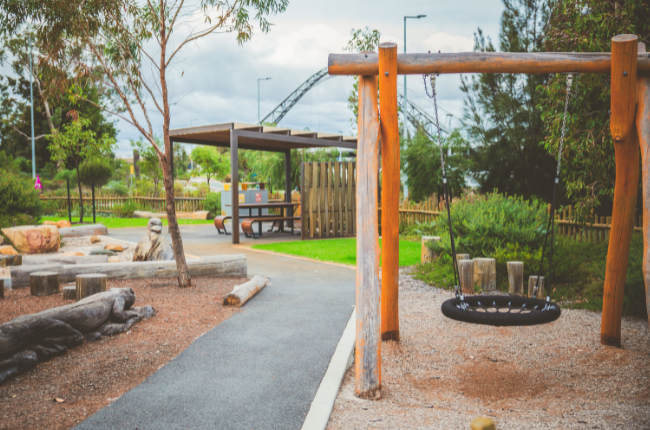
Jumping, climbing and occasionally falling is a normal part of growing up. But when playgrounds aren’t properly designed or maintained, everyday child’s play can quickly turn into serious injury.
Here’s why playgrounds play such an important role in community life – and how to ensure they remain safe for your community.
A space for connection and wellbeing
Whether in rural towns, regional centres or busy city neighbourhoods, playgrounds support wellbeing in many ways, including physical activity and motor skills, mental health, promoting social interaction, & inclusivity. They can also have economic benefits for Councils, where well-designed, engaging playgrounds enhance neighbourhood appeal and can help boost property value and local business activity.
Importance of good playground design
Councils should consider a number of factors prior to determining if a playground is going to meet their objectives and community expectations. This should initially include determining if there is a need for a playground and if so, what type of equipment will be best suited, and is this project viable. Other considerations include climate, the availability of resources, suitability of a site, existing hazards adjacent to and within a proposed site, expected levels of usage, compliance & orientation of infrastructure, accesibility for all users, ongoing maintenance needs budgets.
Regardless of availability of grant funding or budget for construction, Council will need to follow all applicable Australian Standards for site selection and playground design, and should consider allocating a certain percentage of the playground budget each year to keep the infrastructure safe and up-to-date for the future.
Risks of neglected playgrounds
Playing on a neglected playground increases the likelihood of injury. Falls, sharp edges and unstable equipment can all result in serious harm.
Councils have a legal duty of care to ensure playgrounds are safe. When maintenance is overlooked,high injury rates can put councils at risk of:
- Financial liability, including costs related to injuries and repairs
- Legal liability, such as negligence claims and public liability lawsuits
- Reputational damage and loss of community trust
- Regulatory penalties or reduced access to public funding
Guidelines
When maintaining or upgrading a playground, councils should:
- Comply with Australian standards: Ensure local playgrounds meet AS 4685 for playground equipment and AS 4422 for playground surfacing. These standards cover design, installation, inspection, maintenance and operation.
- Identify all playgrounds and complete risk assessments: Use risk assessments to identify and prioritise potential hazards at all playgrounds, determine whether additional measures needs to be implemented (such as fencing or surfacing requirements), and apply permanent signage to outline Councils’ prohibitions, hazards identified and other relevant site information.
- Developing a Facility Risk Rating : Calculate the FRR by determining which hazards are on-site, the level of development, the number of people using the playground and frequency of use.
- Prioritise regular inspections and maintainenance: Once the FRR is determined, Council has a clearer picture of how to prioritise it’s inspection regime. Visual and Operational inspections are essential for moveable equipment, and help implement a clear maintenance timetable. This also assists to identify and address hazards early, including deterioration of equipment and surfacing.
- Ensure staff are adequately trained : Operational Staff should hold nationally-recognised qualifications that allow them to undertake visual inspections (level 1) and operational inspections (level 2). Training is offered by organisations like Kidsafe NSW and PlaySafety through Registered Training Organisations (RTOs) that meet national standards.
- Keep accurate records: Up-to-date records are essential for safety and legal compliance. These include inspections, repairs, incidents and maintenance activities.
These practices align with the Kidsafe NSW guidelines, widely regarded as the gold standard in NSW for playground safety.
We’ve all heard the unmistakable cry of a child who has taken a tumble. The occasional fall or accident is an unavoidable part of play. But serious harm can often be prevented through proper playground maintenance.
For more in-depth guidance, members can familiarise themselves with our Playgrounds Best Practice Manual and watch the video provided by Kidsafe on playground safety. Reach out to your Regional Risk Manager today to find out how we can support you further.